 graphwiz.ai
GEO vs SEO: Optimizing for AI Search Engines
AISEODigital Marketing
geoseoai-searchcontent-strategychatgptperplexity
Executive Summary
The search landscape is undergoing a fundamental transformation. Generative Engine Optimization (GEO) is the practice of optimizing content to appear in AI-generated responses—not just search rankings.
Key Takeaways:
- GEO focuses on being cited by AI, not ranking in search results
- Google AI Overviews reaches 2+ billion users monthly
- Gartner predicts 25% drop in traditional search volume
- Early adopters gain significant competitive advantage
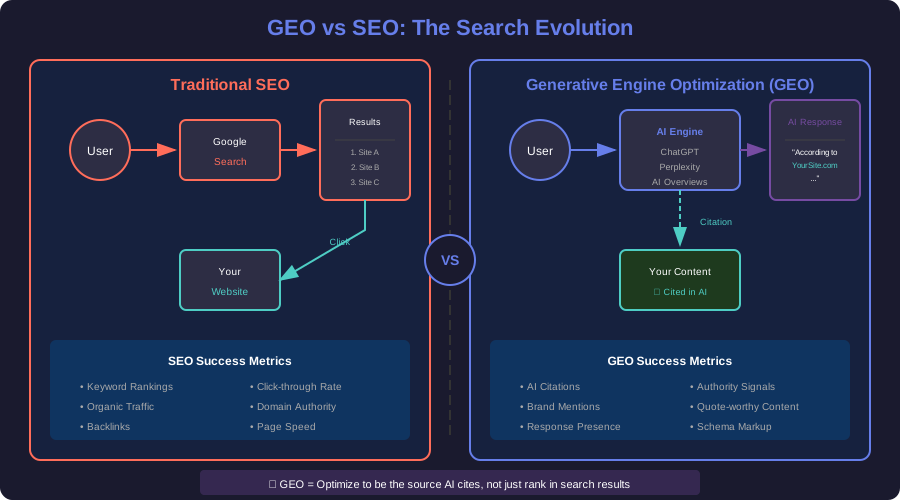
The diagram shows how GEO differs from traditional SEO: AI engines cite your content directly rather than users clicking through to your website.
The Shift: From Searching to Asking
Users are no longer searching—they're asking. And AI is answering. Platforms like ChatGPT, Perplexity, Google AI Overviews, and Claude synthesize information from multiple sources rather than simply linking to them.
| Platform | Users | Key Difference |
|---|---|---|
| Google AI Overviews | 2B+ monthly | Integrated into traditional search |
| ChatGPT | 800M weekly | Conversational with web search |
| Perplexity AI | 15M daily | AI-native search engine |
GEO vs SEO: Key Differences
| Aspect | Traditional SEO | GEO |
|---|---|---|
| Goal | Rank in results | Be cited in AI responses |
| Success Metric | Rankings, traffic | Citations, brand mentions |
| Content Focus | Keywords, backlinks | Authority, fact-rich content |
| Optimization | Meta tags, links | Schema markup, quote-worthy content |
Core GEO Strategies
- Structure for AI Understanding: Use clear headings, lists, and definitions
- Authority Signals: Build expertise credentials and citations
- Fact-Rich Content: Provide specific, citeable information
- Schema Markup: Implement structured data for AI parsing
# Example: Organization schema for authority
type: Organization
name: Your Company
description: Clear description of what you do
sameAs: https://schema.org/Organization
```text

1. **llms.txt File**: Create `/llms.txt` to guide AI crawlers

```markdown
# Your Company
> Description of your business and expertise

## Main Content
- [Topic 1]: /path/to/content/
- [Topic 2]: /path/to/content/

## Recommended Links
- [Resource 1](https://example.com)
```text

## Tools for Tracking GEO Performance

| Tool | Purpose |
| ------ | --------- |
| Otterly.ai | AI visibility monitoring |
| Semrush AI Toolkit | AI search analytics |
| Ahrefs Brand Radar | Brand mention tracking |
| Manual Testing | Direct verification across platforms |

## Getting Started

1. **Audit current visibility**: Test how AI engines reference your content
2. **Identify citation gaps**: Where should you appear but don't?
3. **Optimize content structure**: Implement GEO best practices
4. **Build authority signals**: Strengthen expertise credentials
5. **Monitor and iterate**: Track citations and adjust strategy

## Conclusion

GEO represents the most significant shift in search visibility in decades. The question is no longer "how do I rank?" but "how do I become the source AI cites?"

---

**Read the full article**: [GEO vs SEO: Optimizing Content for AI Search Engines in 2026](/ai/geo-generative-engine-optimization-guide/)