DevOps in the Age of AI: Why Loops Are Mission Critical
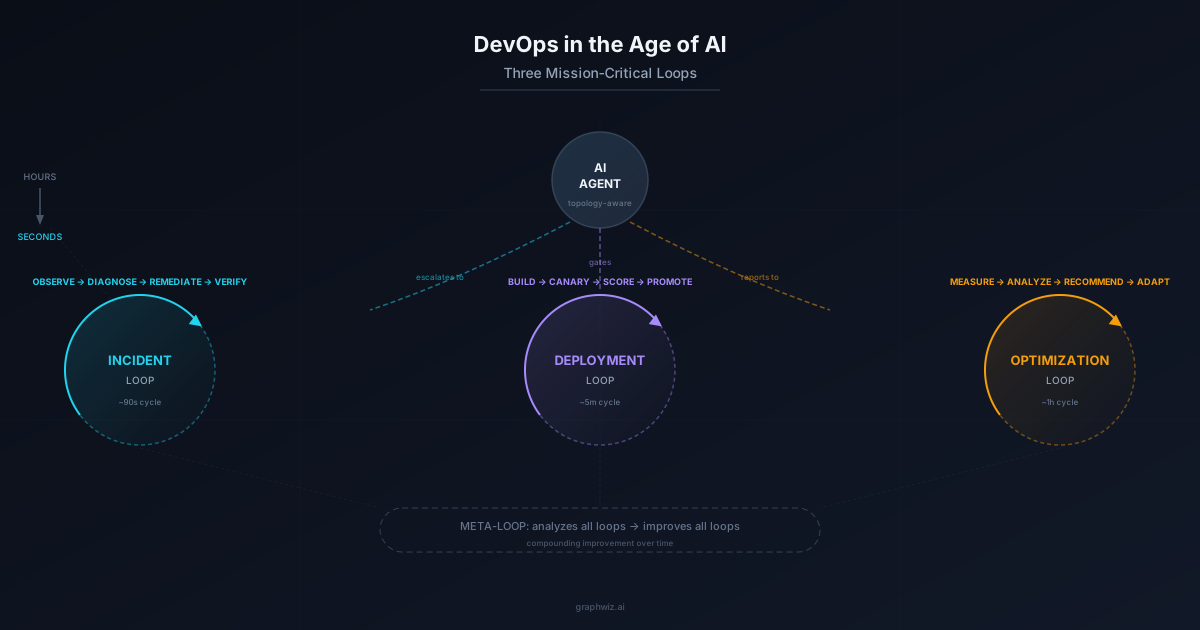
The Old DevOps Loop Was a Human Chain
Before AI agents entered production infrastructure, the DevOps loop looked like this:
- A metric spikes
- A dashboard turns red
- A pager goes off
- A sleep-deprived engineer logs in
- They grep through logs
- They find the root cause (maybe)
- They fix it (hopefully)
- They write a postmortem (eventually)
- They add a runbook entry (if they remember)
The cycle time of this loop was measured in hours to days. The bottleneck was not tooling — it was human attention. There are only so many incidents a team can process in a shift, and each handoff between steps introduced latency, context loss, and error.
This model worked when infrastructure was simpler, traffic was predictable, and the cost of downtime was manageable. We are past that point now.
AI Compresses the Loop — Radically
The AWS DevOps Agent, which reached general availability in March 2026, is the most concrete signal yet that the old model is obsolete. It is not a chatbot that answers questions about your infrastructure. It is an autonomous operator that maintains a live model of application topology, correlates telemetry across observability, CI/CD, and ticketing systems, and acts on incidents without human prompting.
The compression ratio is staggering:
| Phase | Pre-AI | With AI Agent |
|---|---|---|
| Detect | Dashboard lag (30-180s) | Real-time anomaly detection |
| Diagnose | Engineer grep logs (5-60 min) | Topology-aware root-cause (seconds) |
| Decide | On-call huddle (5-30 min) | Automated risk assessment |
| Act | Manual runbook execution (5-60 min) | Automated remediation |
| Verify | Manual check (2-15 min) | Automated validation |
The loop that once took an hour now takes 90 seconds. But compression introduces a new class of failure, and that is where this article lives.
Three Mission-Critical Loops
Not all loops are created equal. In an AI-driven DevOps operating model, three loops determine whether your infrastructure runs itself or runs itself into the ground.
1. The Incident Loop
Observe → Classify → Diagnose → Remediate → Verify → Document
This is the most mature loop, because it maps directly to existing incident response workflows. The AI agent replaces the human chain with an automated pipeline.